Kazz AI, the assistant inside Kazz (2025 - Present)
The AI layer of Kazz: a chat that answers questions about your own spending, receipt and voice capture, automatic categorisation, split-bill maths, and a written review of the month. [Golang, Genkit].
Every account gets this, not only paying ones. The free tier rations how often rather than locking anything away, and the allowances reset instead of running out.
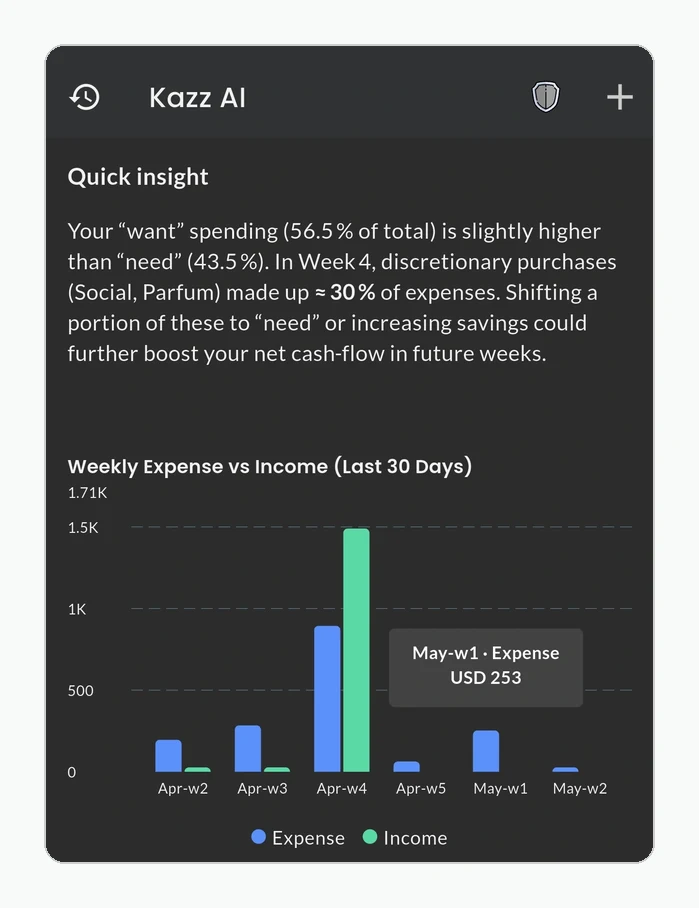
What it does
- answer questions about your own transactions, in plain language
- generate a weekly or monthly review whenever you ask for one
- draw the chart that goes with an answer, rather than leaving you a paragraph of numbers
- record a transaction from a sentence you type or say
- read a photographed receipt into itemised expenses
- suggest a category for a transaction instead of asking you to pick one
- split a scanned bill evenly, per item, or by percentage
- answer questions about Kazz itself: where a feature lives, what it does
Asking about your own money
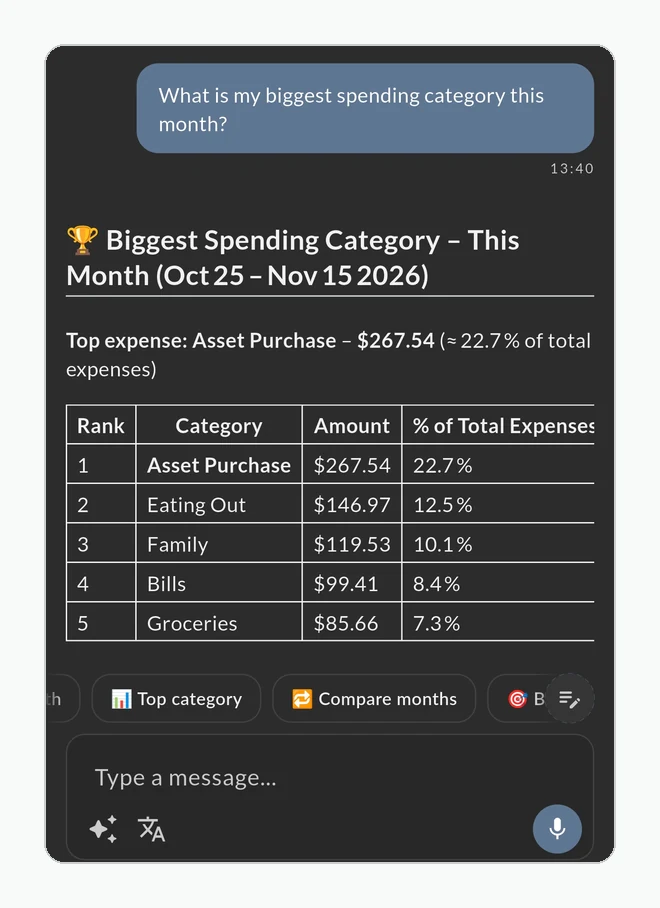
The chat is not a general assistant that happens to know about finance. It is scoped to one person’s records: where did the money go last month, how much is left in the food budget, compare this month to February. Answers come from your actual transactions, not from the model’s impression of what a month usually looks like.
When the answer involves a breakdown, a comparison, or a trend, the reply carries the chart with it. A written total tells you the number; the chart tells you the shape, and the shape is normally what the question was really about.
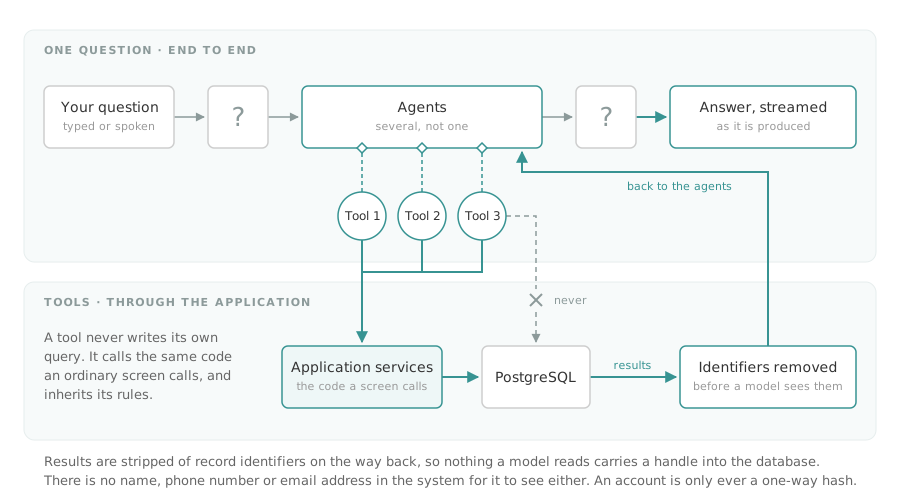
Several agents and several tools take part in a single answer, and not one of them reaches the database on its own. Every tool calls the same application service an ordinary screen calls, with the same credentials you signed in with, so each tool inherits that code’s authorization and cannot see anything you could not already open for yourself.
On the way back, results are stripped of their record identifiers before any model reads them. Together with an account that is only ever a one-way hash of an email address, that means a conversation about your spending carries amounts, dates and categories, and nothing that points at you or at a row in a table.
The monthly review
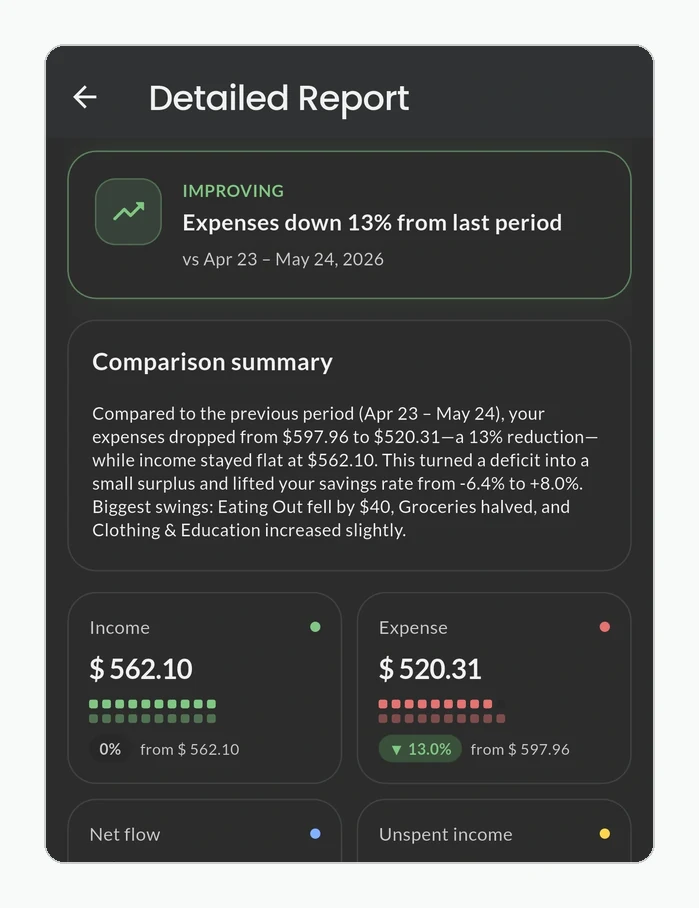
The review is written prose rather than a dashboard: what went up, what went down, which days did the damage, and what that suggests for next month. It compares against the previous period, so “high” means high for you rather than high in the abstract.
It is generated off the request path. You ask, the work is queued, a notification arrives when it is ready. Nobody waits on a spinner for a language model, and the load spreads out rather than landing all at once at the start of the month.
Capture, not typing
Receipt scanning and voice entry both end in the same place: a draft transaction with an amount, a category, and a wallet already filled in, waiting for you to confirm it. Categorisation runs on ordinary typed entries too.
Split bill is the same capability pointed at a shared receipt. Scan the bill, divide it evenly, by item, or by percentage, and the amounts each person owes come out the other side.
What the model is not trusted with
Anything the model returns about your figures is checked against the real aggregates before it is stored, and anything it invents is dropped and counted. A number that reaches you has been verified against your own records, because a plausible wrong figure in a finance app is worse than no figure at all.
Chat sessions carry an expiry, and the length is chosen in the app: three hours unless you change it.
Tech stack
- Golang with Genkit for tools, structured output, and streaming
- OpenRouter and OpenAI behind a single port, with a per-request price ceiling
- A job queue and worker for report generation, delivered by push notification
- PostgreSQL for the stored reviews and conversation state
- Prompts and reports localised per user, in the user’s own currency
- OpenTelemetry traces and metrics through every call
Where it sits
The reviews do not run in the request path, which is the same trade I made in ITventory in 2020 with a scheduled CCTV ping, and again in Risa in 2021 with a precomputed read model. Pay on a schedule so the read is free. It was a ping job then and it is a language model now.